
Learn
The People Who Wrote This Field Into Existence
A student? Start with a shorter reading list built for you. For Students →
Here's where to go deeper, organized by where the work comes from.
Research
United Kingdom
Professor Clare McGlynn — Durham University
McGlynn and her colleague Erika Rackley coined the term “image-based sexual abuse” in 2016, replacing “revenge porn” in legal and academic use. Her research has since shaped deepfake legislation in the UK and directly informed a landmark deepfake abuse ruling in Australia. Start with her foundational paper, “Image-Based Sexual Abuse” (Oxford Journal of Legal Studies), and her ongoing work.
claremcglynn.com →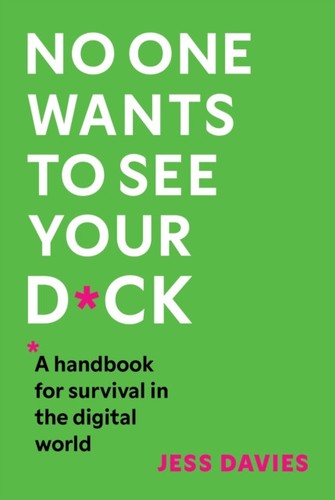
Jess Davies — “No One Wants to See Your Dick: A Handbook for Survival in the Digital World” (Headline, 2025)
Davies, a former model turned campaigner, started this work after living through image-based sexual abuse herself. Her book is a practical, plainly written guide — cyberflashing, deepfakes, catfishing, the “manosphere” — built for people who need to understand this now, not eventually. She has since called intimate-image abuse in Britain a “national emergency.”
Find the book →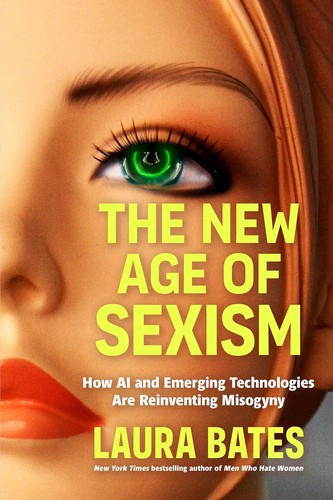
Laura Bates — “The New Age of Sexism: How the AI Industry Is Reinventing Misogyny” (2025)
Bates, founder of the Everyday Sexism Project, turns her attention to how AI tools — including nudify apps and deepfake generators — are automating and scaling the same misogyny she's tracked for over a decade. A wider-lens companion to McGlynn's legal work and Davies' firsthand account.
Find the book →
Research
United States
Cyber Civil Rights Initiative (CCRI)
The longest-running US research and advocacy organization in this space, publishing survey-based research on prevalence, perpetrators, and platform response since 2014 — the source of some of the most cited US statistics on who's affected and who's responsible.
cybercivilrights.org →Thorn — “Sexual Extortion & Young People” and “Deepfake Nudes & Young People” (2025)
Thorn's youth-focused research is the clearest picture available of how sextortion and deepfake abuse are actually reaching teenagers, based on direct survey data rather than adult assumptions about what's happening online.
thorn.org/research →Digital Identity Foundation — State of Image-Based Abuse (first report, Fall 2026)
Our own Research & Education program is publishing a six-month landscape report followed by the inaugural State of Image-Based Abuse report, built on detection data no other research institution has access to, through our partnership with Protect Privacy AI.
Research
Canada
WeProtect Global Alliance
Canada is a member of this international alliance working across governments, industry, and civil society to track the global threat picture and push for aligned legislation — useful for understanding how Canadian policy fits into the wider international response.
weprotect.org →Bill C-16, the Protecting Victims Act (2026)
Received Royal Assent and took effect in July 2026, extending Canada's existing intimate-image law (in place since 2015) to explicitly cover AI-generated and “nearly nude” deepfake images, with penalties up to five years for distribution.
Facts on this page are sourced from named organizations and reporting as of August 2026. This space moves quickly — figures like helpline totals and case outcomes change.
Keep Learning
More from the Learn Hub
Types & Terms
Every form this abuse takes, and the language to name it.
Read →Case Studies
Five of the biggest recent cases, and what each one changed.
Read →Why Enforcement Is Hard
How the internet is actually built, and why a 48-hour takedown law only reaches one layer of it.
Read →For Students
Five fast, real reads about what's actually happening to people your age.
Read →Stay Connected
Stay Updated on Survivor Stories and Advocacy
Get notified when we publish new stories and share advocacy updates. A couple emails a month, easy to unsubscribe.
Emails come from the Digital Identity Foundation with a neutral subject line.